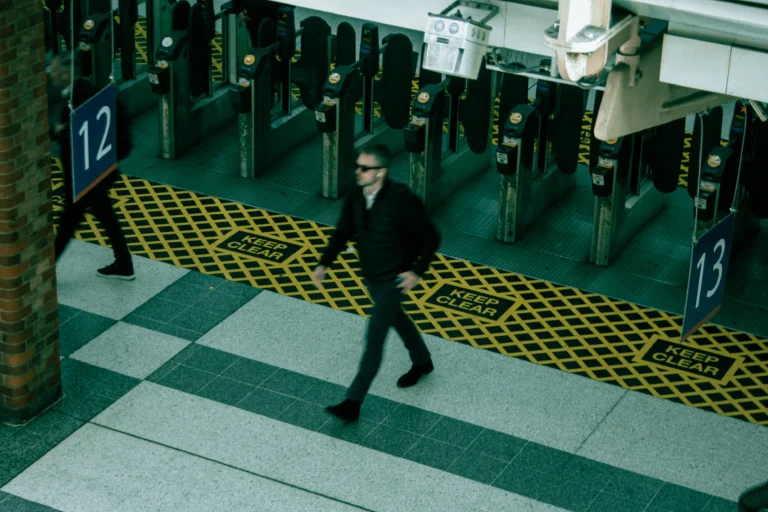
If you work long hours, commute through a noisy city, and feel like sleep is the first thing that gets sacrificed when life gets busy – you’re not alone.
For most adults, the evidence-backed target is at least 7 hours of sleep per night, and consistently getting less is linked to poorer concentration, mood, and long-term health. (1)
The good news? You don’t need a perfect lifestyle to sleep better.
Below are seven science-backed sleep hacks for busy professionals living fast-paced, high-stress urban lives. These are practical strategies you can start using tonight to improve sleep, energy, and daytime productivity.
Hack 1: Use Light Like a Boss: Anchor Your Circadian Rhythm
Your body runs on an internal clock (your circadian rhythm), and light is its strongest signal.
- Morning light tells your brain it’s time to wake up
- Evening light, especially from screens, delays melatonin and shifts sleep later
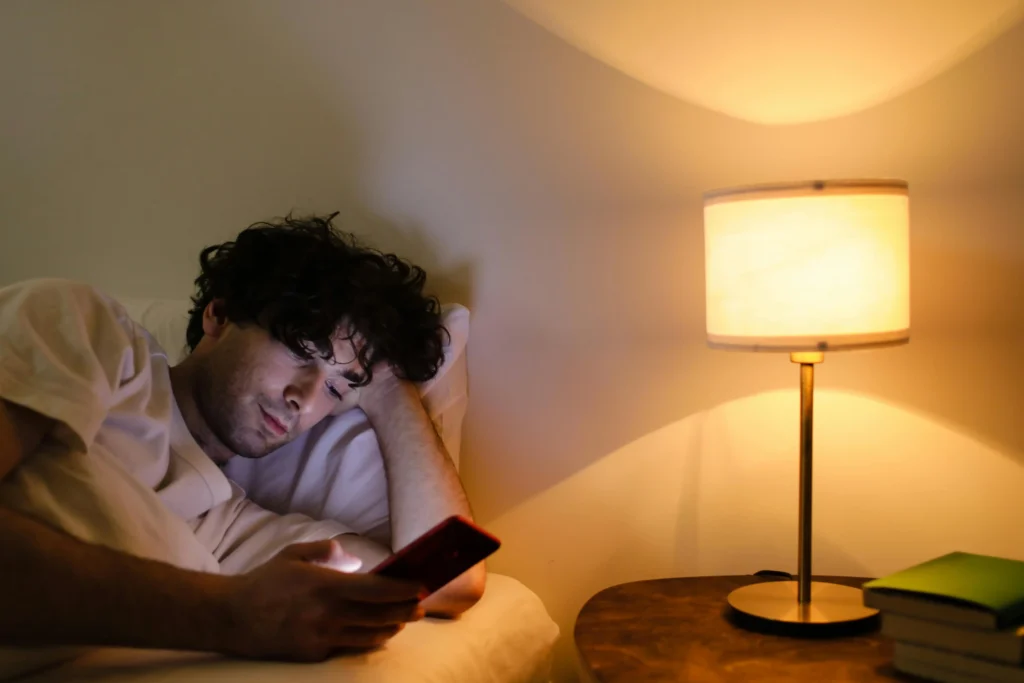
Try this:
- Get 10-30 minutes of outdoor light within an hour of waking
(coffee + short walk counts) (2) - After sunset, dim overhead lights and switch devices to night mode (3)
Even dim indoor lighting can reduce melatonin production. (4)
Hack 2: Build a Consistent Wind-Down Routine (and Wake Time)
Consistency is one of the most powerful sleep tips for professionals. (5)
Your body thrives on rhythm.
Do this:
- Pick a wake-up time you can keep most days of the week
- Create a simple 30-60 minute wind-down routine before bed:
Examples:
- reading
- warm shower
- light stretching
- journaling to offload thoughts
Try to avoid work emails or stressful conversations late at night.
Hack 3: Be Strategic With Caffeine (and Alcohol)
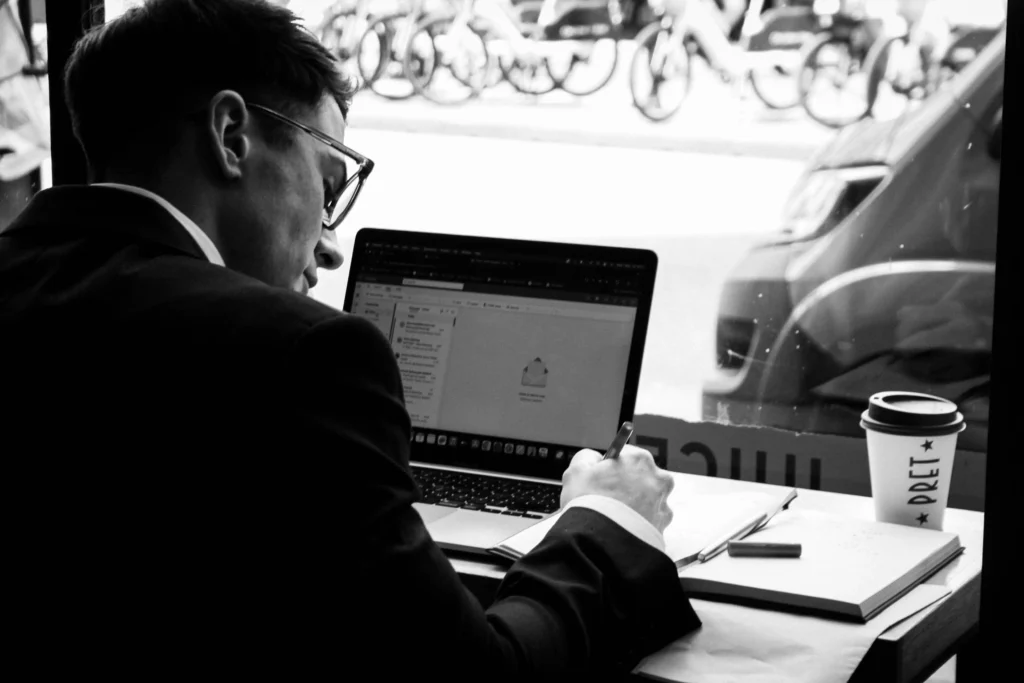
Caffeine boosts focus, but it sticks around longer than you think.
Research shows caffeine can reduce deep sleep even 6+ hours after consumption. (6)
Better approach:
- Keep caffeine to morning + early afternoon
- Experiment with your cutoff (many people need to stop by 2-3pm)
Also worth noting:
- Alcohol may help you fall asleep faster
- But it fragments sleep later and reduces REM recovery
Hack 4: Master the Power Nap Without Ruining Night Sleep
Short naps can be a productivity superpower.
The sweet spot is 10-30 minutes – long enough to refresh, short enough to avoid grogginess.

NASA research found ~20-26 minute naps significantly improve alertness. (7)
Rules of thumb:
- Nap before 3pm
- Keep it short and intentional
Hack 5: Make Your City Bedroom a Sleep Sanctuary
Urban sleep is harder because of:
- streetlights
- traffic noise
- late-night deliveries
- apartment heat
But the fixes are simple and powerful.
Darkness
Use blackout curtains or a quality sleep mask. Darkness supports melatonin and deeper sleep. (8)
Sound
Mask city noise with:
- white/pink noise
- earplugs
- fan or sleep earbuds
Night noise is linked to disturbed sleep and health effects. Reducing it matters. (9)
Temperature
Most adults sleep best in a cool room: 15–19°C (60-67°F). (10)
Hack 6: Use Evidence-Backed Natural Sleep Aids (Smartly)
Natural sleep aids can be genuinely helpful. The key is using them as a support tool, not a substitute for the basics like light, routine, and stress reduction.
For many people, the challenge is consistency – buying multiple supplements, remembering dosages, and building a routine that actually sticks.
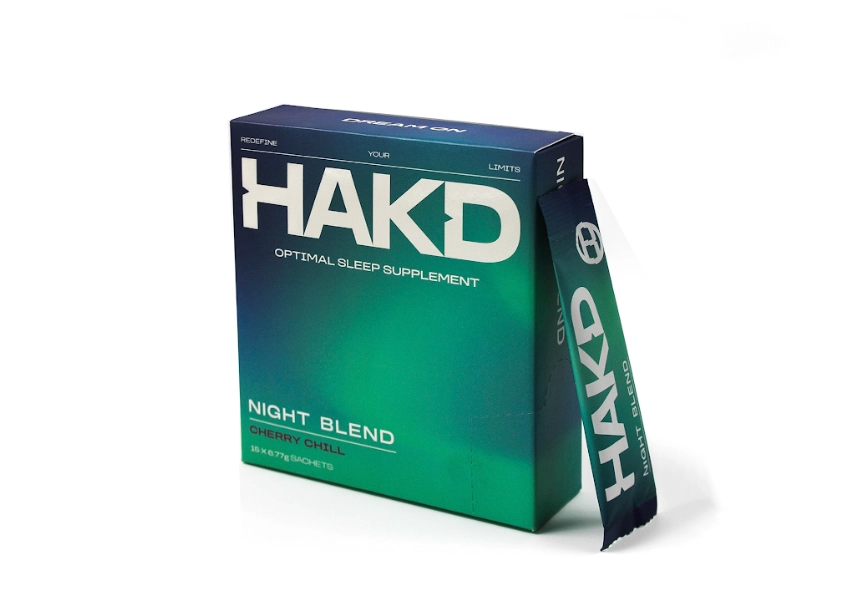
That’s why we created Night Blend: an all-in-one, science-backed sleep supplement designed to support relaxation, recovery, and deeper sleep naturally – without needing a cupboard full of different products.
Night Blend combines fifteen active sleep-supporting compounds into one simple nightly drink, making it easier to build a sustainable wind-down ritual.
You can learn more about the Night Blend formula here.
Hack 7: Reduce Pre-Sleep Stress With Mental “Shutdown” Tools
Stress is the #1 sleep thief for high performers.
Your brain doesn’t switch off just because the lights go out.
Try this nightly off-switch:
- 5-minute brain dump: write tomorrow’s top 3 priorities
- 2-minute breathing: box breathing (4-4-4-4)
- Progressive muscle relaxation or guided meditation
These techniques have been shown to reduce arousal and improve sleep onset. (11)
Quick 2-Week Sleep Plan (Busy Professional Edition)
Copy/paste this into your calendar:
Weekdays
- 07:30 – Wake + 15-min sunlight walk
- 09:30–14:30 – Caffeine window only
- 12:30 – Optional 20-min nap (before 3pm)
- 20:00 – Stop work, dim lights, night mode on
- 21:00 – Wind-down: reading, bath, journaling
- 22:00 – Lights out (aim for 7–9 hours)
Tweak times to match your job. The goal isn’t perfection – it’s consistency.
The Urban Advantage: Small Changes = Big Productivity Gains
For busy professionals, better sleep is the most efficient performance hack you can buy: improved focus, mood, creativity and fewer days lost to exhaustion.
Start with light, protect your bedroom from city disruption, be strategic with caffeine and naps, and use short mental tools to offload stress.
Don’t wait. Build a repeatable shutdown routine. Shop Night Blend now.
References:
- (1) https://www.cdc.gov/sleep/data-research/facts-stats/adults-sleep-facts-and-stats
- (2) https://www.sleepfoundation.org/circadian-rhythm
- (3) https://www.health.harvard.edu/staying-healthy/blue-light-has-a-dark-side
- (4) https://www.sleepfoundation.org/light-therapy
- (5) https://www.nhlbi.nih.gov/health/sleep/how-much-sleep
- (6) https://pubmed.ncbi.nlm.nih.gov/36870101/
- (7) https://ntrs.nasa.gov/api/citations/20190033981/downloads/20190033981.pdf
- (8) https://www.webmd.com/sleep-disorders/what-to-know-about-blackout-curtains
- (9) https://iris.who.int/server/api/core/bitstreams/71c1d252-463d-40a9-842e-5126d7fdbdec/content
- (10) https://www.thensf.org/sleep-tips/
- (11) https://pmc.ncbi.nlm.nih.gov/articles/PMC10002474/